
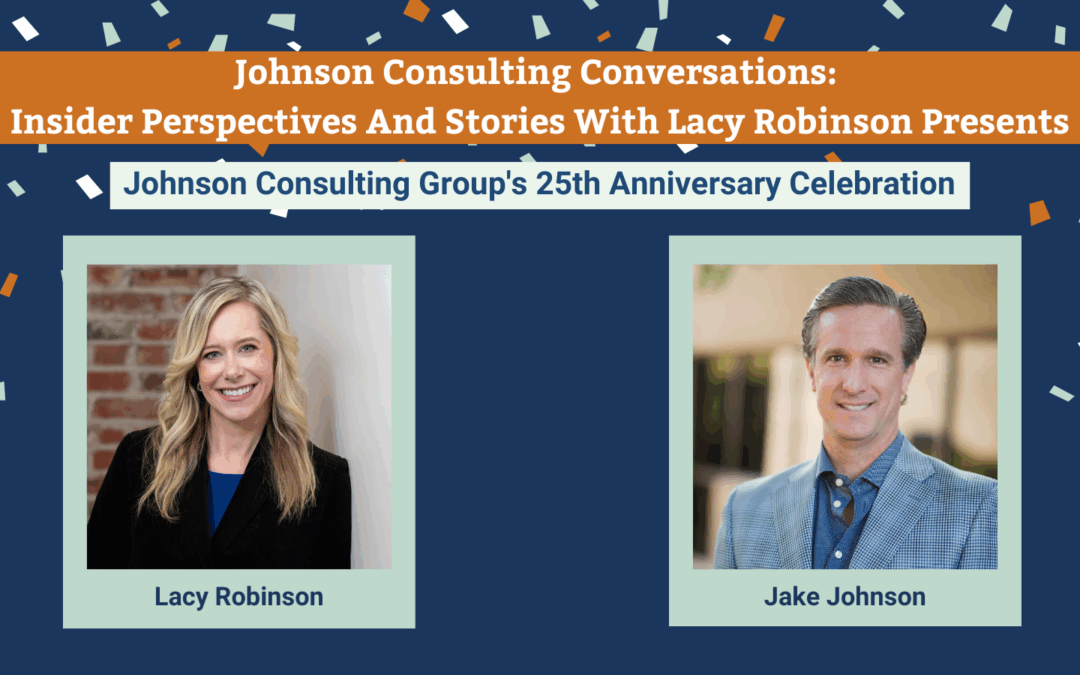
Recently, I had the privilege of sitting down with Jake Johnson, President and CEO of Johnson Consulting Group, to commemorate their remarkable 25th anniversary. Founded by Jake’s father Tom in 2000, the company has become the premier expert in funeral and cemetery service, offering more than 800 years of combined funeral service experience. Our conversation revealed not only the evolution of a successful consulting firm but also the profound changes reshaping the funeral service.
When I asked Jake what his father Tom would be most proud of seeing today, his response immediately highlighted the personal nature of funeral service. “My father loved this profession and his friends,” Jake shared. “I think it was exciting for him to see that those relationships continue with what he built and to what we have today.”
This emphasis on relationships began early for Jake. Growing up, he had the opportunity to meet funeral home owners his father worked with in Los Angeles. What struck him wasn’t just their graciousness toward him as Tom’s son, but their inherent nature as “funeral people.” This early exposure to fun the profession’s unique community spirit drew him into the profession rather than pursuing a completely different path.
The company’s mission has evolved significantly since Tom’s initial vision. What started as helping people figure out business valuations and succession planning expanded into a comprehensive suite of services. “Dad really tried to retire and just knew a lot of people,” Jake explained. “So they kept asking him questions and he said, well, maybe I should do some consulting.”
As opportunities arose, particularly when SCI was divesting certain funeral homes back to former owners, clients began requesting additional services beyond transactions. They needed help with funeral home accounting, consulting, coaching, customer surveys, and operational guidance. This organic growth transformed Johnson Consulting Group into what Jake describes as a “complete 360 life cycle of the business” partner.
Over the past 25 years, Jake has witnessed dramatic changes in funeral service. While cremation rates were expected to rise, he identifies technology and labor costs as the most significant shifts. “The way in which payroll is handled and the cost of labor and how we take care of people and find them,” he noted, represents a fundamental change affecting profit and loss statements across the industry.
The rise of cremation has created what Jake describes as two distinct customer segments: traditional customers who value established funeral home services, and those seeking quick, direct cremation options. This division has forced funeral homes to reconsider their service delivery models and marketing approaches.
Perhaps most significantly, the influence of social media and increased access to information has made consumers more selective and demanding. “When you see so much of what’s available out there, you tend to be a little more selfish about what you want in life,” Jake observed, noting that this generational shift requires funeral homes to adapt their approaches to meet evolving expectations.
Customer service has emerged as the key differentiator in today’s market. “You get online and you see descriptions and pictures and everything like that. But you go in and meet somebody face to face and that experience is how you’re going to differentiate yourself,” Jake emphasized.
Technology plays a crucial role in delivering consistent customer experiences. Jake highlighted the importance of case management systems that function as both customer relationship management and project management tools. For high-volume operations, ensuring smooth handoffs between team members becomes critical to maintaining service quality.
When discussing how independent funeral homes can remain competitive against consolidation, Jake offered several key strategies. First, he emphasized that good private funeral homes will always be competitive in their markets against distant ownership. The personal connection and community knowledge that independent operators possess remain significant advantages.
However, independents must embrace funeral home technology and structured marketing to level the playing field. Jake particularly stressed the importance of active pre-need programs, noting that consolidated companies have improved their approach to employee care and market outreach.
One of Johnson Consulting Group’s core specialties is succession planning, and Jake identifies several critical mistakes he sees repeatedly. The biggest error is simply not planning soon enough. “Every funeral business should have a valuation done and they should have a business assessment done,” he stressed.
The sobering reality, as Jake puts it, is that waiting too long means accepting whatever value exists at the time of succession, regardless of whether owners like that number. “That might have been the value five years ago and there probably were ways to make that a different number for you if you would have planned.”
For multi-generational family businesses, the challenges become even more complex. Issues around payroll structure, debt management, and lifestyle expectations all factor into successful transitions. Jake recommends running “side by side proformas” – one determining current value and another showing available cash flow for independent operation.
When I asked Jake to envision funeral service 25 years from now, his perspective balanced optimism with realism. He believes strong independent funeral homes will always maintain their community presence, while continued consolidation will occur as younger generations explore alternatives to automatically adopting family businesses.
Jake expects cremation rates to cap around 80% in most markets, similar to what his own funeral home has experienced. Rather than viewing rising cremation as purely negative, he sees it as creating new opportunities. “A crisis is a terrible thing to waste,” he noted. “If you see something as a crisis for you and for others, that’s also an opportunity for you to take it from others.”
Technology will continue reshaping the industry, particularly around licensing and cross-border service delivery. Jake anticipates interesting developments in virtual arrangements and online service delivery that may challenge traditional regulatory frameworks.
Throughout our conversation, Jake’s entrepreneurial mindset within the traditional funeral service framework became apparent. His experience with the Entrepreneur Organization taught him the importance of what he calls “parking lots” – structured time to review ideas rather than sending team members in multiple directions simultaneously.
For those considering entering funeral service, Jake emphasizes the industry’s personal nature and willingness to welcome newcomers. He encourages prospective professionals to leverage the strong network within funeral service to find mentorship and experience opportunities.
His advice for struggling funeral home owners is straightforward: take the first step by making contact. “Be comfortable with being uncomfortable,” he advises, emphasizing that creating stage gates for complex challenges makes them manageable rather than overwhelming.
Johnson Consulting Group’s 25-year journey reflects both the stability and evolution within funeral service. Under Jake’s leadership, the company continues honoring Tom’s founding vision while adapting to serve an industry in transition. As Jake noted, their commitment remains clear: “We’re in this for the long run.”
The conversation reinforced that success in funeral service – whether as an operator or consultant – ultimately depends on maintaining the personal relationships and community focus that define the profession, while embracing the tools and strategies necessary to thrive in a changing marketplace. For more information about Johnson Consulting Group’s services, visit www.johnsonconsulting.com. Out next Johnson Consulting Conversations will feature Dr. Jason Troyer on October 15th.
Contact JCG Today!